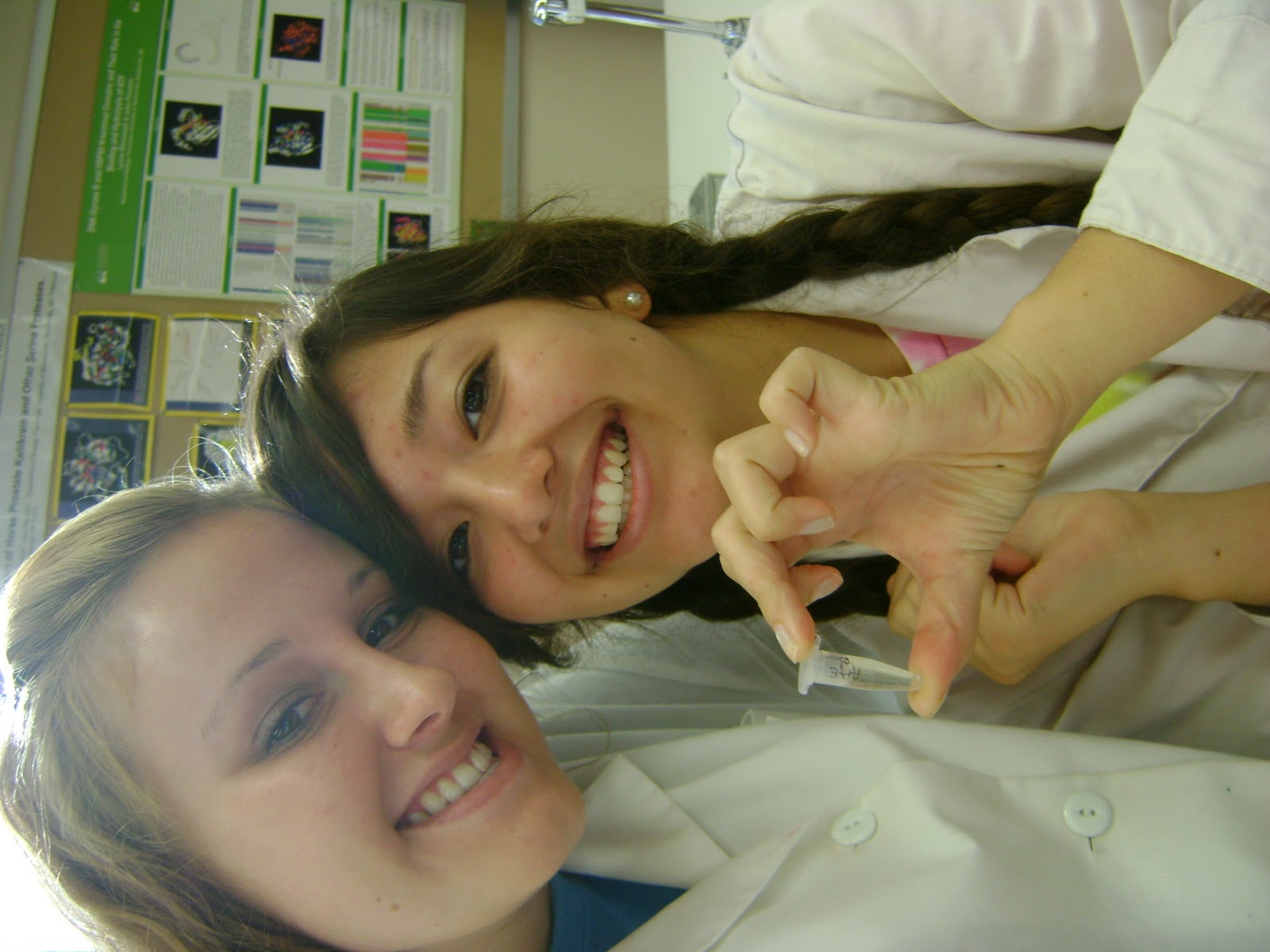
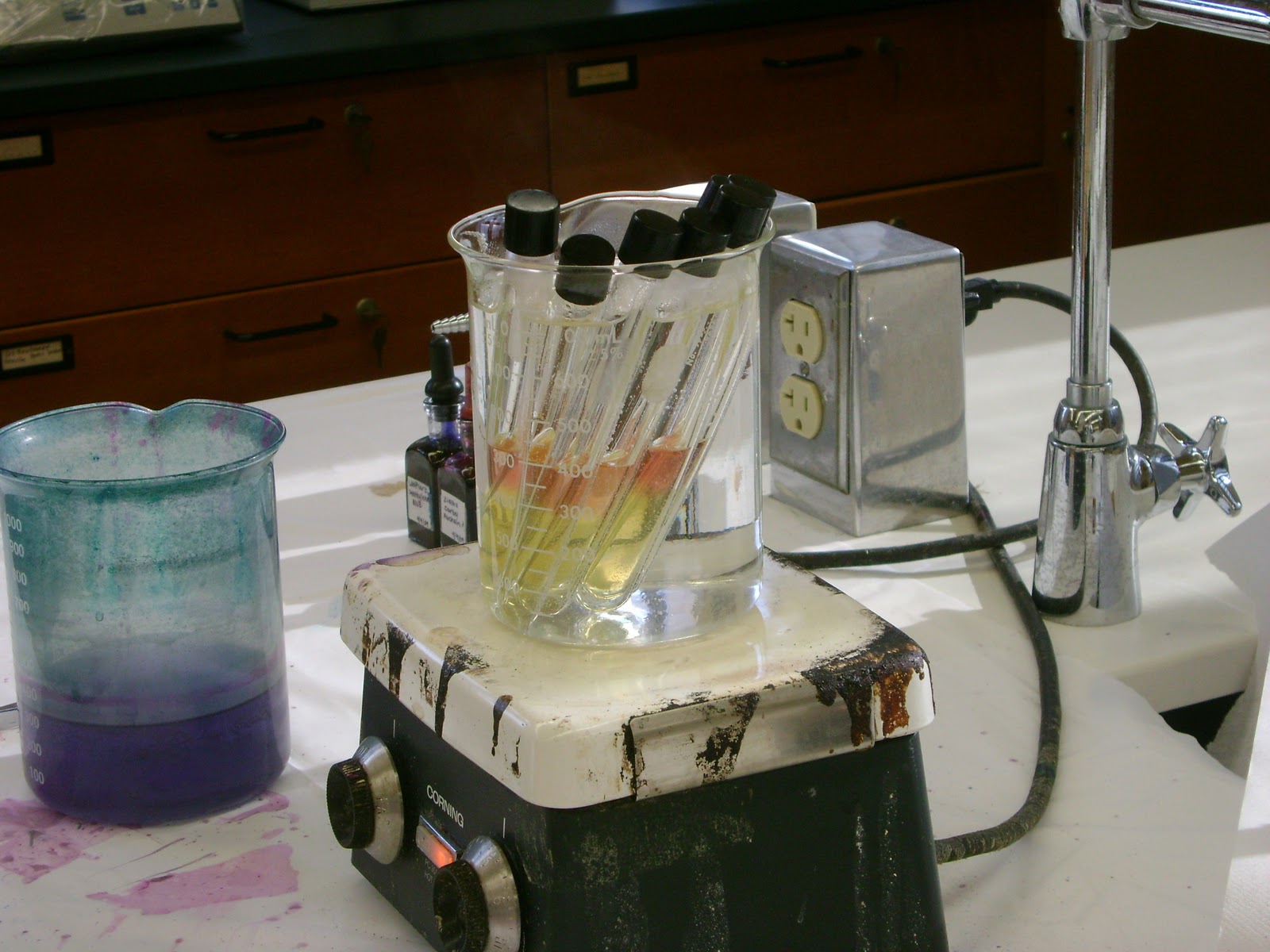
Today, we inoculated lots of different test tubes with our unknown sample to determine what enzymes it has and what it utilizes. These tests included the Citrate utilization test, Indole test, Nitrate reduction test, and the Urea hydrolysis test. We also streaked a plate and put 7 different antibiotic chips on to determine which antibiotics are effective. Results Thursday, enjoy the pictures!
I am a sophomore nursing student at the Franciscan University of Steubenville, creating this blog for the lab component of my Medical Microbiology class!
Tuesday, November 8, 2011
Tuesday, November 1, 2011
EMB, Mannitol, and MacConkey Agar
We streaked EMB, Mannitol, and MacConkey agar plates with our unknown bacteria L 25, and determined that since our bacteria was pinkish on the EMB plate, it is a gram-negative enteric bacteria, with a lower acid production because it only partially ferments lactose. The mannitol plate was negative, our bacteria does not ferment mannitol. Our MacConkey agar plate confirmed that our gram-negative enteric bacteria partially ferments lactose. It is a facultative anaerobe which oxideses H202, which means it has catalase. Hopefully next week, we will identify it!
Thursday, October 20, 2011
Test Results!
Today, we checked the results from all the tests we performed on Tuesday. Our unknown bacteria was positive for gelatin hydrolysis. It also fermented glucose and sucrose, but not lactose, using the Durham tube tests. Our bacteria was negative for the Methyl red test, but positive for the Voges-Proskauer test. Our bacteria had a red slant and a yellow butt with a gas bubble for the TSIA test, which means only glucose was fermented. We will check the litmus milk test next week.
Tuesday, October 18, 2011
Lots of Inoculation!
Friday, October 14, 2011
Oxygen Utilization and the Digestive Enzyme Test
Next, we made streak plates to test the digestive enzymes of our unknown bacteria. We streaked a starch agar plate, a lipid plate, and a casein plate (skim milk). After 24 hours, we came back to check the results. After adding Gram's iodine to the starch plate, we determined unknown L 25 was negative for starch hydrolysis. The casein plate also indicated our bacteria was negative for casein hydrolysis. The triglyceride plate was different, our bacteria indicated positive for lipid hydrolysis! We're getting so close to identifying it!
Enjoy the pictures!
Tuesday, October 11, 2011
Long Term Storage of Bacteria and Determining Oxygen Requirements
Acid Fast and Endospore Staining!
Last week, our group split the tasks of acid fast and endospore staining our unknown samples. I completed the acid fast stain by using Ziehl-Neelson carbolfuchsin on a slide that was over a beaker of boiling water. After decolorizing that stain with acid-alcohol and covering it with methylene blue for two minutes, I used the microscope's oil immersion lens to determine that our unknown sample is non-acid fast, because the sample was purple. Annie also determined our unknown sample (L 25) had no endospores. 
Subscribe to:
Posts (Atom)